
Geographic Scope: Statewide (New Mexico)
Report Type: Data Profile Funding Medicaid Recommendations
Behavioral Health & Substance Use Treatment Gap Analysis
YEAR
2024This Legislative Finance Committee analysis examines New Mexico's fragmented behavioral health system, revealing that despite substantial investment across 17 state agencies totaling over $1.1 billion, the lack of coordinated state planning results in persistent service gaps and poor outcomes including the 49th ranking for adult substance use disorder nationally.

Report Type: Data Profile
Behavioral Health Barometer NM Vol. 6
YEAR
2019The Behavioral Health Barometer: New Mexico, Volume 6 provides state-level substance use and mental health prevalence data that establishes critical baseline metrics for understanding behavioral health needs and treatment capacity across New Mexico's population.
Report Type: Data Profile Medicaid
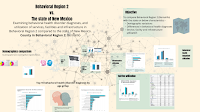
Behavioral Health Diagnoses (Behavioral Region 2 Compared to NM)
YEAR
2025This Medicaid data comparison report examines behavioral health diagnoses, service utilization, and infrastructure between Behavioral Region 2 (Bernalillo County) and New Mexico statewide, providing essential baseline metrics for understanding regional behavioral health system capacity and gaps.
Report Type: Assessment Plan Recommendations
Behavioral Health Needs & Gaps in NM
YEAR
2002This 2002 comprehensive statewide assessment of behavioral health needs and gaps in New Mexico provides foundational prevalence data, system barrier analysis, and detailed recommendations that remain relevant for understanding structural challenges facing behavioral health systems change in Bernalillo County and throughout the state.
Report Type: Plan Recommendations
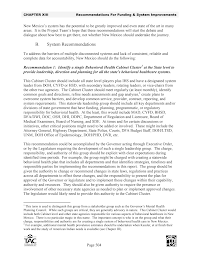
Behavioral Health Needs & Gaps NM (Recommendations)
YEAR
2002This chapter from a comprehensive New Mexico behavioral health assessment provides detailed recommendations for creating a unified, accountable statewide behavioral health system through improved governance, service standardization, workforce development, and strategic funding reforms.
Report Type: Infrastructure Provider Resource Toolkit
Behavioral Health Provider Toolkit
YEAR
2021This is a New Mexico Behavioral Health Services Division Provider Toolkit that guides agencies and practitioners through the process of becoming enrolled Medicaid behavioral health providers, which matters for systems change because it addresses workforce expansion and service capacity barriers.

Report Type: Governance Provider Resource SB3
Behavioral Health Service Standards
YEAR
2025This document is New Mexico's official Behavioral Health Service Standards manual that establishes the regulatory framework, service definitions, and operational requirements governing all Medicaid-reimbursed behavioral health services across the state, providing essential guidance for providers and systems planners implementing behavioral health programs.

Report Type: Governance Provider Resource
Behavioral Health Specialty Program Overview
YEAR
2020This is a New Mexico behavioral health service certification reference guide that catalogs the full spectrum of state-certified behavioral health services, their oversight requirements, and application processes—essential for understanding the regulatory landscape and available service types for systems planning in Bernalillo County.

Report Type: Community Forum/Survey Plan Recommendations SB3
Brief: Civic Academy on Behavioral Health in 2035 NM
YEAR
2025This brief summarizes a civic academy convening that explored how New Mexico can implement Senate Bill 3's $291 million behavioral health investment through community-driven planning, workforce development, cultural humility, and youth leadership.

Report Type: Assessment Community Forum/Survey Data Profile Recommendations
Collaborating for Youth & Public Safety in NM: Key Findings & Recommendations (CYPSI Presentation)
YEAR
2025This presentation from the Council of State Governments Justice Center provides comprehensive findings and recommendations for transforming New Mexico's youth-serving systems through cross-agency coordination, evidence-based interventions, and a public health approach to youth violence prevention.