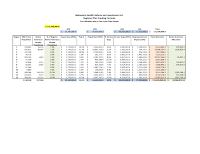
SB3 Regional Plan Funding Formula Table
YEAR
2025
AUTHOR / ORGANIZATION
NM Health Care Authority
GEOGRAPHIC SCOPE
Behavioral Health Region, Statewide (New Mexico)
What is this?
This is a state funding allocation formula document that distributes Behavioral Health Reform and Investment Act dollars across New Mexico's 13 behavioral health regions. The formula uses a weighted methodology incorporating equal base distribution, population, service gaps, and disproportionate impact measures. The document serves as a reference for regional planning bodies, showing precisely how $115.5 million will flow to each region over the four-year grant period, including specific allocations designated for Native American service populations.
Summary
This funding formula provides the financial foundation for behavioral health systems change across New Mexico. Region 2, which includes Bernalillo County, receives the largest allocation at approximately $14.5 million, driven primarily by its population share (31.3% of state population). However, Region 2’s service gaps percentage (3.2%) is the lowest among all regions, suggesting relatively better existing infrastructure compared to rural areas. For Bernalillo County systems planners, this data reveals both opportunity and responsibility: while the region receives substantial funding, other regions with higher service gap percentages (Regions 6, 7, and 11 ranging from 7.4% to 13%) face more acute infrastructure deficits. The Native American allocation for Region 2 totals approximately $1.06 million, reflecting the 48,947 Native American service population. Systems change initiatives should consider how Bernalillo County’s relatively stronger infrastructure can support regional collaboration, workforce development pipelines, and specialty services that serve multiple regions. The formula’s emphasis on service gaps (35% weight) signals state priorities for addressing underserved areas.
BH Systems Change Recommendations
How This Report Informs Systems Change This funding formula document does not contain explicit recommendations but provides essential data for systems change planning: 1. Resource Baseline: Establishes the financial parameters within which all regional behavioral health planning must operate for the four-year period. 2. Gap Analysis Foundation: The service gap percentages reveal where state analysis identified greatest infrastructure deficits, informing where workforce and service expansion should prioritize. 3. Equity Framework: The inclusion of Native American service population allocations and disproportionate impact weighting signals state commitment to health equity that local planning should mirror. 4. Regional Collaboration Opportunities: Regions with lower service gaps but higher funding (like Region 2) may have capacity to support workforce training or specialty services benefiting multiple regions. 5. Investment Timing: Four-year funding horizon enables longer-term systems change planning rather than year-to-year reactive budgeting.
How to Use for Systems Planning
What this report IS useful for: - Understanding the total funding envelope available for Region 2 behavioral health investment - Comparing regional allocations and service gap assessments across the state - Identifying Native American population service needs and dedicated funding - Establishing baseline for multi-year systems change planning and grant matching What this report DOES NOT provide: - Guidance on allowable uses of funds or spending requirements - Timeline for fund distribution or reporting requirements - Service gap methodology or underlying data sources - Specific program or intervention recommendations - Administrative or implementation procedures
Key Facts & Data Points
- Total statewide allocation: $115,500,000 over four years - Region 2 (Bernalillo County area) allocation: $14,486,367 - Region 2 population: 670,922 (31.3% of state total) - Region 2 Native American service population: 48,947 - Region 2 Native American allocation: $1,056,850 - Region 2 service gap percentage: 3.2% (lowest in state) - Formula weights: 20% equal base, 30% population, 35% service gaps, 15% disproportionate impact - Total Native American allocation statewide: $10,968,013 - Region 11 has highest Native American service population: 116,129 (61.3% of region) - Region 7 has highest service gap percentage: 13.0% - 13 behavioral health regions across New Mexico - State population covered: 2,140,348
Priority Services & Findings
**SUD Organizations** Funding can support substance use disorder treatment infrastructure, with service gap allocations targeting regions with greatest unmet SUD needs. **Mental Health / Crisis Care** Regional allocations provide baseline funding for mental health and crisis care expansion, with 35% of formula weighted toward addressing service gaps. **Integrated Primary Care** No specific integrated care provisions identified in this funding formula document. **School-Based / Youth Services** No specific school-based or youth services allocations identified in this document.
Immediate Actions for Systems Planners
-Confirm Region 2's $14.5 million allocation timeline and disbursement schedule with state administrators. -Request the underlying service gap analysis data that produced Region 2's 3.2% service gap rating to validate against local assessments. -Coordinate with tribal health authorities regarding the $1.06 million Native American allocation and culturally appropriate service planning. -Develop four-year spending framework aligned with funding availability and systems change priorities. -Identify opportunities for inter-regional collaboration with higher service gap regions for workforce development and specialty care. -Establish baseline metrics to track how funding investments reduce service gaps over the grant period.
Key Contacts
**/ - No Contacts Included in Report